
Travel to Labuan Bajo is entering a new chapter starting in 2026. The Indonesian government will implement a structured visitor management system in Komodo National Park, introducing daily quotas and scheduled entry sessions.
If you’re planning to hike Padar Island, see the Komodo dragons in their natural habitat, or snorkel in crystal-clear waters, this update is important. The goal is not to limit tourism, but to protect the ecosystem while improving the overall visitor experience.
Here’s everything you need to know.
Over the past few years, Labuan Bajo has grown rapidly as one of Indonesia’s premium travel destinations. Visitor numbers have increased significantly, especially in high-demand areas such as Padar Island and the main trekking routes to see the Komodo dragons.
While this growth is positive for tourism, it also brings challenges:
To prevent long-term environmental damage, park authorities are introducing a structured quota system designed to balance tourism and conservation.
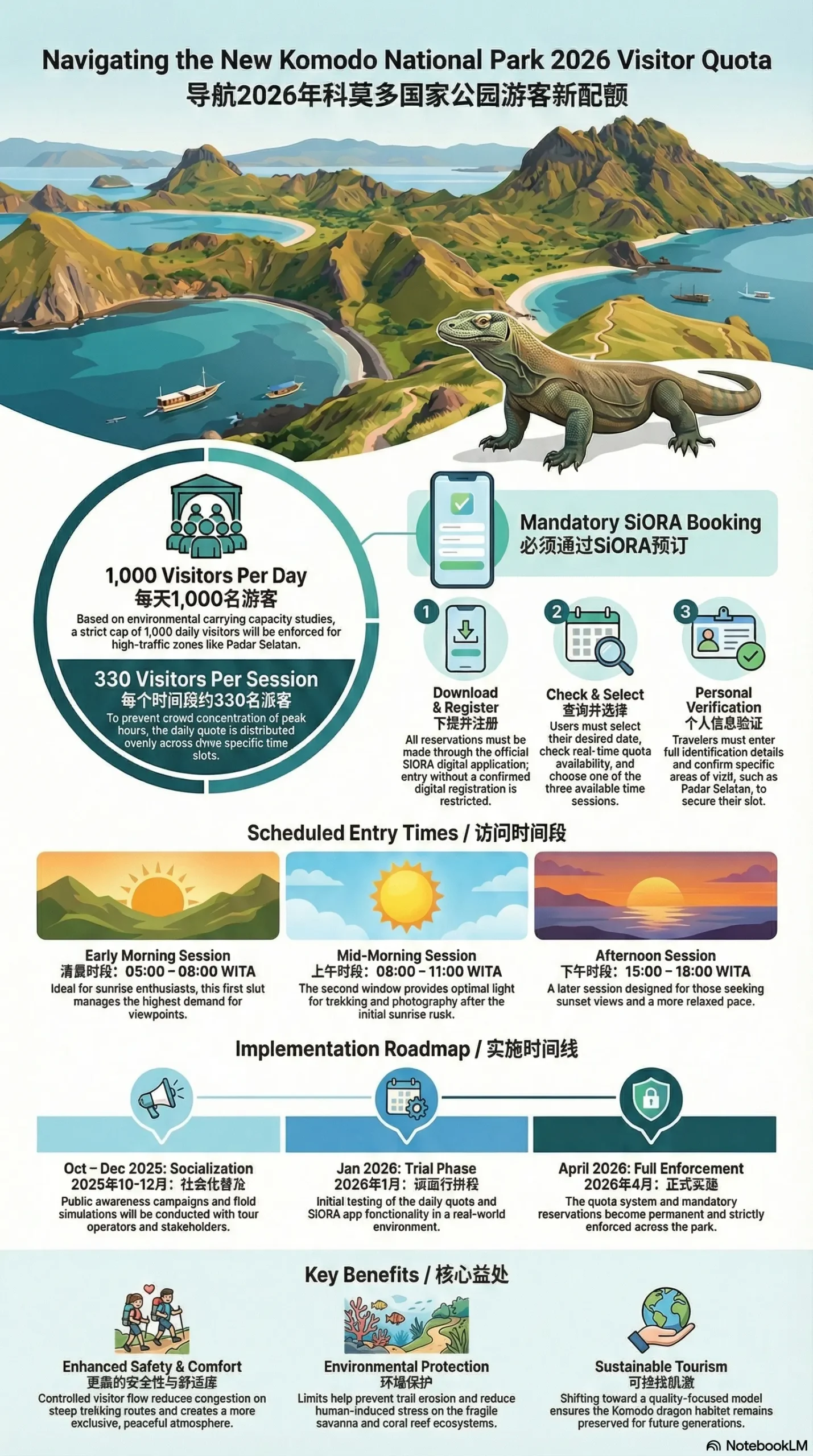
The new regulation will be implemented gradually to allow smooth adaptation.
Public socialization and field simulations with tour operators and stakeholders.
Trial phase of daily visitor quota implementation.
Full enforcement of the quota system across Komodo National Park.
This phased approach ensures the system is tested before becoming permanent.
Based on environmental carrying capacity studies, the park has set a maximum limit of 1,000 visitors per day, particularly for high-traffic areas such as Padar Selatan.
To avoid crowd concentration, visits will be divided into three time sessions:
Each session accommodates approximately 330 visitors.
This system is designed to:
Starting in 2026, visitors must secure entry through the official digital reservation system called SiORA.
The general booking process includes:
Without confirmed registration in the system, access to certain areas may be restricted.
Because daily slots are limited, early booking is strongly recommended, especially during peak travel seasons.
Some travelers may wonder whether this makes visiting Komodo more complicated. In reality, it brings several advantages:
Fewer crowds mean less waiting and more time to enjoy the scenery.
Controlled visitor flow reduces congestion on steep trekking routes.
Komodo dragons and marine ecosystems face less stress from human activity.
Labuan Bajo is moving toward a sustainable tourism model focused on quality rather than volume.
To ensure a smooth journey, consider these practical tips:
Limited daily quotas mean spontaneous peak-season visits may be difficult.
If sunrise sessions are full, afternoon visits can offer equally stunning views.
Choose operators familiar with the latest regulations and reservation procedures.
The reservation system requires accurate personal information.
Read also: Best Time to Explore Komodo National Park
Absolutely.
The new system is not a restriction, but a refinement. By limiting daily numbers, visitors can experience Komodo in a more peaceful and authentic atmosphere.
Imagine trekking Padar Island without excessive crowding, enjoying panoramic views with space to breathe, and witnessing Komodo dragons in a more natural setting. That is the direction Komodo National Park is moving toward.
Beginning in 2026, the 1,000-visitor daily quota and scheduled time sessions will become the standard at Komodo National Park.
This policy aims to:
Komodo remains open to travelers. The difference is that it will now be managed with greater structure and environmental responsibility.
If you are planning a trip to Labuan Bajo, understanding this new system will help you prepare wisely and secure your spot in one of the world’s most extraordinary destinations.